Draw an ordinary day around the address
Start with breakfast, groceries and the return home after dinner. Mark the nearest suitable food shop, public transport stop and practical arrival point. Follow the route rather than relying on a circular distance marker. A bridge, a pedestrian restriction or a long block can change a short line on a map into a less convenient walk. For travellers with limited mobility, establish the actual surfaces, crossings and steps rather than describing an entire district as accessible.
Next inspect the immediate frontage. Restaurants, bars, loading areas and bridge approaches can concentrate activity beside an otherwise residential stretch. Look at current maps and recent street imagery, then ask the provider what has changed. Imagery can be old, businesses can close and construction can begin after photographs were taken. Use mapping to generate questions, not to certify that a street will be quiet or a route will remain open.
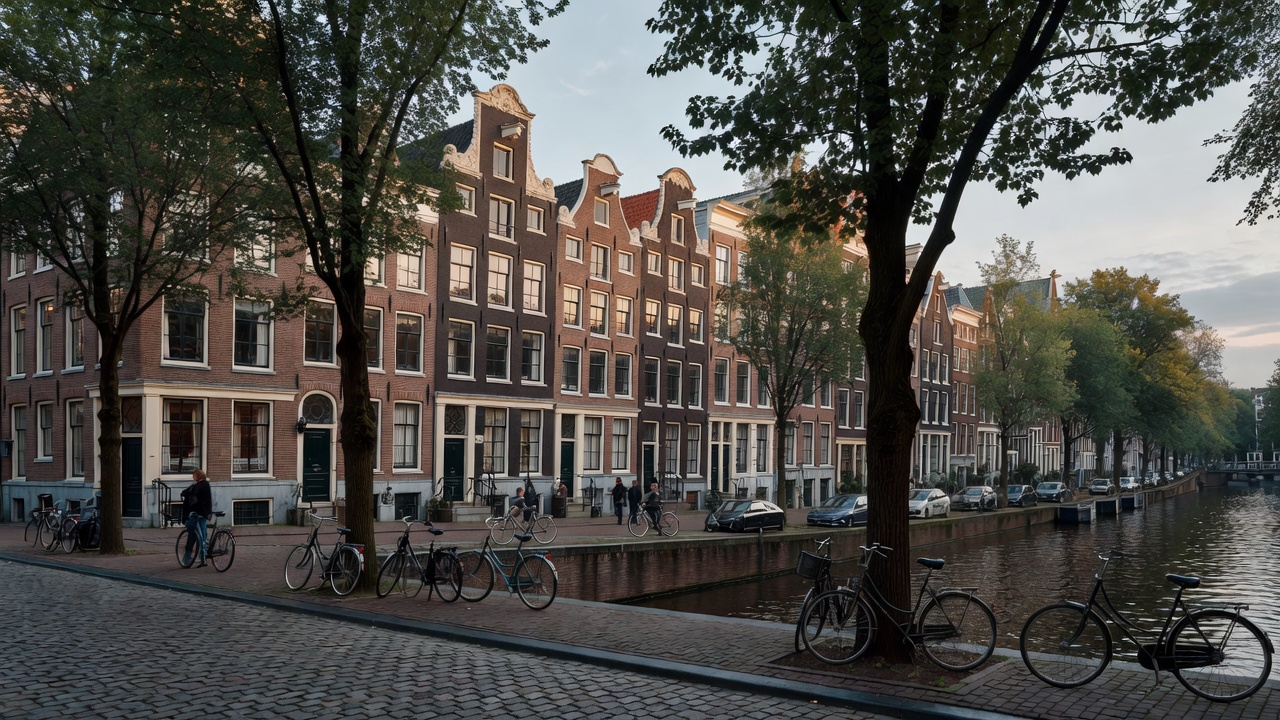
Amsterdam: distinguish the canal from the block
Herengracht, Keizersgracht and Prinsengracht each extend through varied surroundings. Their names alone do not establish a consistent atmosphere or sleeping environment. A house near a busy crossing can feel different from another on the same canal away from that crossing. The Jordaan and De Negen Straatjes are useful orientation references, not guarantees of tranquillity or privacy. Ask which way the bedrooms face and what occupies the neighbouring ground floors.
Consider the route to Amsterdam Centraal or another useful transport connection in the context of your plans. A direct tram connection may suit a stay better than a theoretically walkable address reached with heavy bags. Cycle traffic is part of the street environment, so identify safe places to pause while unloading. For current visitor information, consult I amsterdam; use the City of Amsterdam for municipal information rather than treating editorial descriptions as regulatory advice.
Bruges: look beyond the postcard viewpoint
Rozenhoedkaai, the Dijver and the Groenerei help orient a visitor to Bruges, but a celebrated viewpoint is not a useful proxy for the whole day outside a home. Sightseeing footfall and vehicle arrangements vary by location. Ask where arrivals can stop, how luggage reaches the entrance and whether the outlook shown belongs to a private room or a public vantage point nearby. A listing’s neighbourhood photograph may depict neither the frontage nor the view from inside.
A street set back from the water may provide a simpler entrance or a less exposed living room while retaining convenient walks. That is a trade-off to test, not a universal recommendation. If returning late matters, inspect the route from the places you expect to visit, including lighting and crossings. Consult Visit Bruges for current destination information and verify property-specific arrangements directly with the accommodation provider.
Venice: bridges are part of the address
In Venice, a short map distance can include several bridges and changes of direction. Cannaregio, Dorsoduro and San Polo are large, varied areas, not single accommodation experiences. Compare the precise route from an appropriate vaporetto stop, remembering that the nearest stop may not be the most useful for your arrival service. Count unavoidable bridges if steps matter. Ask who will meet you and what happens if your journey is delayed.
A view of the Grand Canal does not promise private boat access. Equally, a home on a smaller canal is not necessarily silent: service movements and nearby walking routes still matter. Ask about the entrance level and the provider’s current arrangements for high-water conditions where relevant. Venezia Unica provides official visitor information; check current transport and access requirements through official channels before travel rather than relying on a rental description.
Copenhagen: separate destination waterfronts from domestic streets
Nyhavn and Christianshavn are familiar waterfront references, but their particular streets, buildings and public spaces differ. A home near restaurants may offer convenient evenings and a busier outlook. Another address may favour grocery shopping, a metro connection or quieter internal rooms. Avoid importing the expectations formed by an Amsterdam canal house into a different building type. Ask the same practical questions about stairs, windows and private space, whatever the architectural vocabulary.
Use VisitCopenhagen for destination context, then test the actual route against your party’s needs. Across all four cities, the most useful comparison is not which district is universally “best”. It is which exact setting supports the stay you intend to have. Keep a short record of unresolved questions and avoid paying for certainty that the available information does not provide.
- Front-row address
- Potentially stronger views, with public activity and privacy questions to investigate.
- One street back
- Potentially different access and room exposure, without any automatic promise of quiet.